

What the EU Joint Clinical Assessment Means for Patient Support Programs in 2026

For most pharmaceutical commercial and patient engagement teams, the EU Joint Clinical Assessment has until recently felt like a regulatory affairs problem, something handled by market access and Health Economics and Outcomes Research (HEOR) specialists working on dossiers and complex evidence frameworks. That perception is changing rapidly, and for good reason. The JCA does not just raise the bar for clinical evidence. It fundamentally reshapes what kind of data pharma companies need, when they need it, and where it has to come from. Patient support programs, and the digital platforms that power them, are now sitting at the centre of that evidence question in a way they never have been before.
The Regulation Most Patient Support Teams Are Still Underestimating
The EU Health Technology Assessment (HTA) Regulation, formally Regulation (EU) 2021/2282, entered into force in January 2022 and became applicable from 12 January 2025. From that date, all new oncology medicines and advanced therapy medicinal products must undergo a Joint Clinical Assessment at EU level before member states proceed with their own national pricing and reimbursement decisions. The regulation extends to orphan medicines in January 2028 and will cover all new centrally authorised medicinal products by 2030. In 2026, selected high-risk medical devices are entering scope for the first time.
The JCA is a centralised, EU-wide evaluation of the relative clinical effectiveness and safety of a health technology compared to existing alternatives. It runs in parallel with the European Medicines Agency (EMA) marketing authorisation review and produces a single standardised clinical assessment report that all 27 member states can draw upon when making their own national reimbursement decisions. The stated aim is to reduce duplication of effort across member states, accelerate patient access to innovative therapies, and introduce a more consistent and transparent standard of evidence evaluation across Europe.
One important clarification that matters for how patient support teams should think about this: the JCA focuses exclusively on clinical domains. It does not make value judgements, economic assessments, or reimbursement conclusions. Those decisions remain firmly within the authority of each individual member state. What the JCA produces is a shared clinical foundation that feeds into the national HTA processes and payer negotiations that follow. Patient-generated data from support programs therefore feeds those national processes downstream, and those national processes are where pricing, reimbursement, and access outcomes are ultimately determined.
What makes this consequential for patient support teams is what the JCA and national HTAs downstream are now collectively demanding. Where individual national HTAs would previously assess a product against a single comparator in a defined patient population, the JCA requires manufacturers to address a much broader set of evidence requirements structured around PICO frameworks, with PICO standing for Population, Intervention, Comparator, and Outcomes. These frameworks cover multiple patient populations, multiple comparators, and a wider range of clinical outcomes simultaneously, all reflecting the different evidence needs of all 27 member states. All of this must be addressed within approximately 100 days of the consolidated PICO list being communicated for standard procedures, and just 60 days for products going through an accelerated EMA assessment. Manufacturers cannot wait for the official PICO list before beginning their evidence work. They must start generating evidence at risk, based on predicted requirements, or face the very real possibility of a public statement of no evidence in the final JCA report.
The Evidence Gap Nobody Planned For
Clinical trial data alone is no longer sufficient to meet the combined demands of the JCA and the national HTA processes that follow it. This is not a matter of opinion. It is becoming increasingly visible in the first real assessments proceeding through the system.
The JCA requires outcomes that go beyond what the EMA demands for marketing authorisation. Member states consistently request evidence on patient quality of life, health-related quality of life trajectories, and patient-relevant endpoints such as symptom burden and functional status, alongside the more traditional clinical efficacy and safety endpoints. Research published in Pharmaceutical Medicine has confirmed that the JCA framework introduces requirements that vary significantly across member states, with different countries placing different weight on surrogate endpoints, patient-reported outcomes, and quality of life measures.
Germany's AMNOG process, which stands for Arzneimittelmarktneuordnungsgesetz, the German Act on the Reform of the Market for Medicinal Products, runs in coordination with the JCA and governs how new medicines are assessed for their added clinical benefit before a reimbursement price is negotiated. The G-BA, Germany's Federal Joint Committee, which oversees the AMNOG process, requires validation of claimed benefits against patient-relevant outcomes including survival, morbidity, and health-related quality of life. The 2024 revision of Module 3 dossier requirements further emphasised the role of real-world evidence in establishing target population size and treatment patterns. Analysis presented at ISPOR Europe 2025 confirmed that 66.7% of AMNOG dossiers submitted under the new requirements incorporated real-world evidence, a meaningful shift from the historical reliance on clinical trial data alone.
France's Haute Autorité de Santé (HAS) and Scotland's Scottish Medicines Consortium (SMC) are asking similarly harder questions about whether clinical trial results translate into meaningful outcomes for real patients in real healthcare settings. The pattern across European HTA bodies is consistent: randomised controlled trial data establishes that a therapy can work, but it is patient experience in the real world, captured longitudinally and in structured formats, that is increasingly shaping how much a therapy is worth and how widely it will be reimbursed at the national level.
Why This Is Now a Patient Support Problem
The evidence gap the JCA is exposing cannot be closed by market access teams working on dossiers alone. It requires data that comes from patients living with their therapy over time, data that describes what actually happens when a medicine leaves the controlled environment of a clinical trial and enters daily life.
This is where patient support programs become strategically relevant in a genuinely new way. They have historically been designed and evaluated on the basis of adherence and persistence outcomes, sometimes their effect on prescriber satisfaction, and occasionally their role in collecting adverse event reports. The national HTA processes that follow the JCA are changing those stakes considerably.
A patient enrolled in a well-designed digital support program from the point of first prescription generates, over months and years of engagement, exactly the kind of longitudinal patient-reported data that national HTA bodies are increasingly looking for. Adherence patterns, side effect experiences, quality of life trajectories, symptom burden over time, treatment satisfaction scores, and functional status are not data points that typically appear in a clinical trial, but they are precisely what downstream national HTAs and payer negotiations are requiring as part of the evidence base for pricing and reimbursement decisions.
Research published in PLOS ONE in 2024, involving researchers from Novartis Ireland and Novartis Pharma GmbH, confirmed that patient support programs represent a significant and underutilised source of real-world data on medication usage, adherence, and patient experience. The study concluded that the potential of patient support program data for regulatory and HTA purposes remains largely unrealised due to gaps in how data is collected, structured, and governed. That is an honest assessment of where things stand today, and it points directly to where the opportunity and the challenge both lie.
The Honest Truth About Patient Support Data and What It Takes to Make It Credible
This is the part of the conversation that deserves real honesty, because the gap between what patient support programs currently produce and what HTA bodies will actually accept is significant and should not be glossed over.
European HTA bodies, and decision-makers in regulatory and reimbursement processes more broadly, have historically treated patient support program data as a low level of evidence. The concerns are well documented. This kind of data is collected by or on behalf of the manufacturer, which creates a perception of bias that even high-quality data struggles to overcome without independent validation. Data governance varies enormously across programs. Collection methodologies are often designed for patient management purposes rather than scientific rigour. And the absence of prospective analytical plans has historically made patient support data difficult to use credibly in formal submissions.
These are structural problems, not just perception problems. A study published in PMC in 2025 reviewing Canadian patient support program data against real-world evidence guidelines was direct on this point, noting that regulatory and HTA agencies currently consider this kind of data to be a low level of evidence, and that a lack of public transparency in program operations remains a high concern.
The important point is that these problems are solvable, but only if they are addressed from the moment a patient support program is designed, not retrofitted once the access question becomes urgent. A digital patient support platform built with standardised, scientifically validated Patient-Reported Outcome (PRO) instruments, which are structured questionnaires that capture a patient's own assessment of their health, symptoms, and quality of life, combined with GDPR-compliant data governance, pseudonymised and structured data collection, and the ability to deploy indication-specific question sets within a consistent methodological framework, is a fundamentally different evidence asset from one built primarily to drive engagement metrics. The former has a credible path toward contributing to national HTA submissions downstream of the JCA. The latter does not.
This is the distinction that is now commercially consequential. Pharma companies that design their patient support infrastructure with evidence generation requirements built in from the outset are building something that can genuinely inform national pricing and reimbursement conversations. Those that do not are generating data that will struggle to be taken seriously by the payers and HTA bodies that determine market access outcomes.
What the JCA Timeline Means for Evidence Planning Right Now
One of the most important and least understood implications of the JCA for patient support teams is the timeline problem. The JCA process runs in parallel with the EMA regulatory review, which means manufacturers must simultaneously manage their regulatory submission, their JCA dossier preparation, and their national HTA preparations across 27 member states, all within timeframes that leave no room for reactive evidence generation.
The 100-day window for standard procedures, reduced to just 60 days for accelerated assessments, creates an evidence generation challenge that cannot be solved at the point of launch. Evidence that will feed national HTA processes downstream of the JCA must begin accumulating during the clinical development phase, or at the very latest from the moment of regulatory submission, not after the PICO list arrives.
This means that for products currently in late-stage development or recently launched, the window to build a meaningful real-world evidence base from patient engagement is open right now, but it is not open indefinitely. Companies that launch patient support programs after marketing authorisation and then attempt to generate longitudinal evidence from scratch are working against a timeline that the JCA environment makes extremely difficult to manage.
The companies best positioned for national HTA submissions over the next three to five years are those that begin structured patient engagement and data collection early enough to have meaningful longitudinal datasets ready when they are needed. For products already in post-launch phase, building that infrastructure is already an urgent priority.
The Patient Experience Dimension That Is Easy to Overlook
There is another aspect of the JCA that receives less attention but matters a great deal. The JCA framework explicitly builds patient and clinical expert input into the PICO scoping process. In practice this means that patient-relevant outcomes, the kind that speak to quality of life, symptom burden, and daily functioning, are increasingly finding their way into the PICO frameworks that manufacturers must address.
EURORDIS, the European rare disease patient organisation, has described the regulation as a major milestone for European healthcare, one that promises more equitable and patient-centred decision-making. The extent to which that promise is realised will depend significantly on whether the industry can generate patient experience data that is credible enough to be taken seriously by national HTA bodies and payers in the assessments that follow the JCA. This is precisely the kind of data that long-term digital patient engagement, properly designed and governed, is positioned to generate.
What Pharma Teams Should Be Doing Differently Today
The JCA does not require a complete reinvention of patient support strategy, but it does require a meaningful expansion of how those programs are designed, governed, and evaluated.
Patient support programs need to be designed with standardised, validated Patient-Reported Outcome instruments from the outset, with instrument selection informed by the PICO frameworks likely to be relevant for each product. This means involving HEOR and market access teams in patient support design conversations that have historically sat with commercial and patient services teams alone.
The digital platform through which patient support is delivered needs to be capable of generating structured, auditable, longitudinal data at scale. Independent data governance, transparent analytical plans, and pseudonymised data collection are not optional extras if the goal is to produce evidence that national HTA bodies will take seriously.
Patient support deployment needs to shift earlier in the product lifecycle. Beginning meaningful digital patient engagement at or before regulatory submission is no longer just good commercial practice. For products subject to the JCA it is an evidence strategy imperative.
And cross-functional alignment between patient support, market access, HEOR, and medical affairs teams is now essential. The JCA has created a shared evidence challenge that cannot be solved within any single function.
The Commercial Opportunity Inside the Regulatory Pressure
It would be easy to read all of this as purely a burden. That framing misses the genuine commercial opportunity the regulation creates for companies that approach it thoughtfully.
The JCA will produce, for the first time, a single pan-European clinical assessment informing reimbursement decisions in all 27 member states simultaneously. The national pricing and reimbursement negotiations that follow will be shaped by the quality and completeness of the real-world evidence manufacturers can bring to the table. A company that enters those national processes with credible, longitudinal, patient-generated data documenting real-world effectiveness, quality of life impact, and treatment experience is in a meaningfully stronger position than one that arrives with clinical trial data alone.
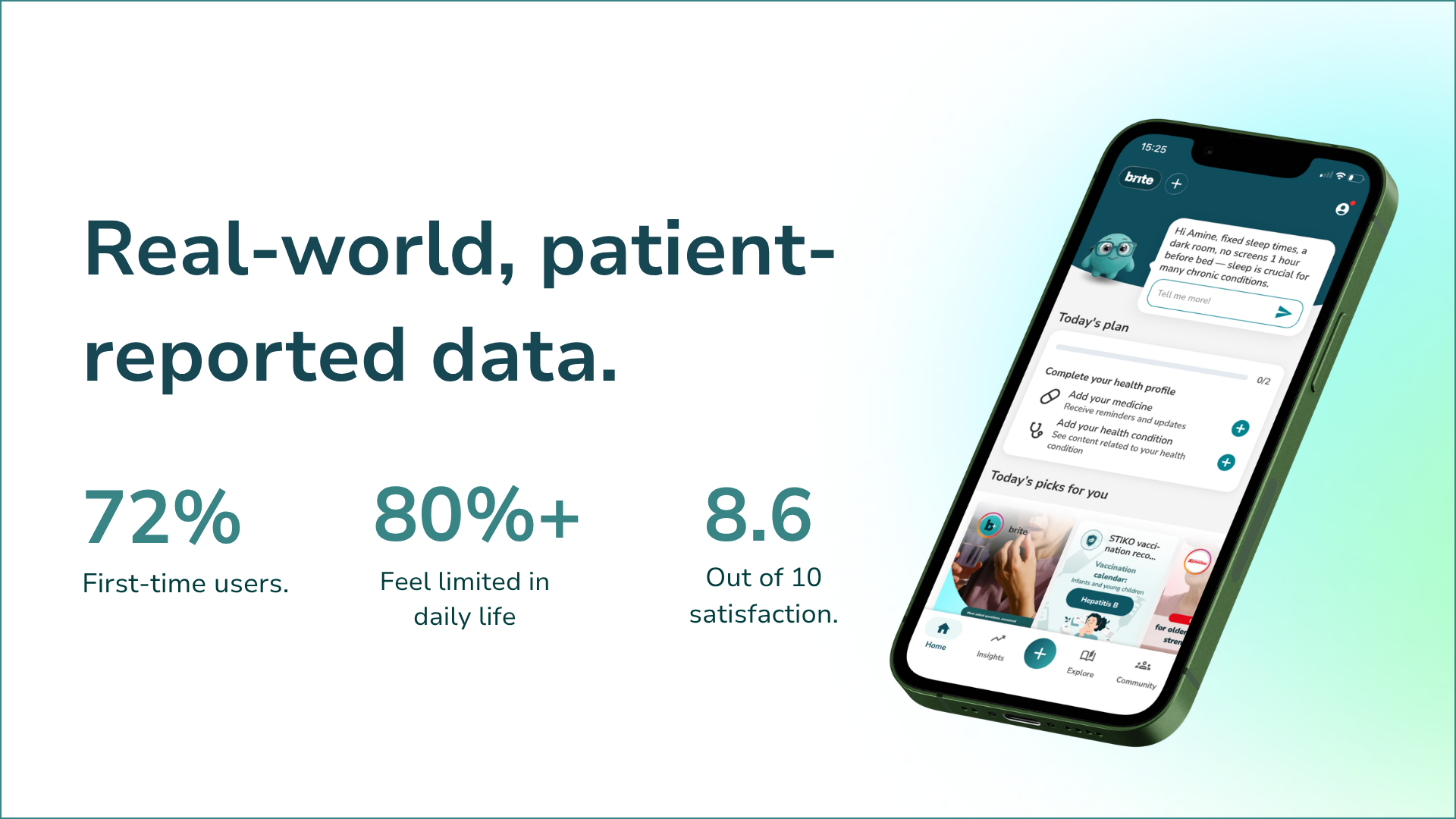
This is precisely the evidence infrastructure that brite was built to support. Working in collaboration with the PROMIS Institute at Charité Berlin, one of Europe's leading research institutes for patient-centred outcomes research, XO Life developed standardised Patient-Reported Outcome questionnaires that meet the scientific rigour required for credible evidence generation. Data collected through brite is pseudonymised, structured, and standardised. The platform is GDPR-compliant and scientifically validated, and pharma partners can deploy product-specific or indication-specific question sets within the same consistent methodological framework. It is not a patient engagement tool with evidence generation bolted on as an afterthought. It is a platform designed from the ground up to generate the kind of structured, high-quality patient-reported data that the national HTA processes downstream of the JCA are increasingly demanding.
The pharma companies that invest now in patient support infrastructure capable of generating evidence that national HTA bodies will take seriously are not just preparing for a regulatory challenge. They are building a commercial asset that will influence pricing and access outcomes across every European market where JCA outputs feed into national reimbursement decisions, which from 2030 will mean every major European market for every new medicine. The window to build that asset is open. The question is simply who moves first.
Discover how brite supports pharmaceutical companies in building patient relationships that generate real-world evidence at xo-life.com/en/brite
Sources
EU HTA Regulation and JCA Frameworkhttps://health.ec.europa.eu/health-technology-assessment/implementation-regulation-health-technology-assessment/joint-clinical-assessments_enhttps://health.ec.europa.eu/document/download/ced91156-ffe1-472d-85eb-aa6a91dd707e_en?filename=hta_htar_factsheet-jca_en.pdfhttps://www.ema.europa.eu/en/news/new-eu-rules-health-technology-assessments-become-effectivehttps://remapconsulting.com/hta/joint-clinical-assessment/jca-evidence-generation/https://pmc.ncbi.nlm.nih.gov/articles/PMC11130920/https://arexadvisor.com/joint-clinical-assessment-guide/https://www.propharmagroup.com/thought-leadership/navigating-eu-health-technology-assessment-regulation-htar/https://value-dossier.com/en/european-health-technology-assessment-eu-hta/https://www.simon-kucher.com/en/insights/simon-kucher-industry-insights-are-pharmaceutical-companies-ready-eu-jcahttps://www.eurordis.org/what-happens-hta-2025/
JCA Evidence Requirements and PICO Complexityhttps://link.springer.com/article/10.1007/s40290-025-00594-7https://pmc.ncbi.nlm.nih.gov/articles/PMC12551043/https://www.ncbi.nlm.nih.gov/pmc/articles/PMC11718771/https://ssistrategy.com/service-area/hta/jca-100-day-timeline/https://www.dlrcgroup.com/hta-regulation-cross-functional-collaboration-to-target-success/
Germany AMNOG and Real-World Evidencehttps://partners4access.com/jca-and-amnog-integration-strategic-insights-from-the-g-ba-info-session/https://www.ispor.org/heor-resources/presentations-database/presentation-cti/ispor-europe-2025/poster-session-5-2/utilization-of-real-world-evidence-rwe-in-amnog-dossiers-following-the-2024-gba-revision-of-module-3-requirementshttps://pmc.ncbi.nlm.nih.gov/articles/PMC4059963/
Patient Support Programs and Real-World Evidencehttps://pmc.ncbi.nlm.nih.gov/articles/PMC10852303/https://pmc.ncbi.nlm.nih.gov/articles/PMC10603246/https://www.frontierspartnerships.org/journals/journal-of-pharmacy-pharmaceutical-sciences/articles/10.3389/jpps.2023.11877/fullhttps://pmc.ncbi.nlm.nih.gov/articles/PMC12019763/https://pmc.ncbi.nlm.nih.gov/articles/PMC12371237/
XO Life and brite Platformhttps://www.xo-life.com/en/blog/xo-life-ebnet-die-zukunft-fur-patient-insightshttps://www.xo-life.com/en/real-world-datahttps://www.xo-life.com/en/news/08222024
Would you like to find out more or are you interested in XO Life?
Get in touch now, get a demo or answer individual questions in a personal conversation.
Discover even more informative articles
A selection of our latest blog posts for you.


Build meaningful relationships with your patients
Have we sparked your interest or do you have specific questions for us? Let us show you how we can brite up your patients health journey.
I am your personal contact:
Zdenka Vesely
Chief Client Officer
