

How Real-World Evidence Is Changing the Way European Payers Value New Medicines

There is a question that sits at the heart of every pricing and reimbursement negotiation in Europe, and it has not changed in thirty years: does this medicine actually work, for real patients, in the real world? What has changed, dramatically and in a very short period of time, is the evidence that payers are demanding to answer it, the infrastructure being built to generate that evidence, and the commercial consequences for pharmaceutical companies that arrive at the negotiating table without it.
Real-world evidence is not a new concept. The tension between the controlled conditions of a randomised controlled trial and the complexity of everyday clinical practice has been documented in the research literature for decades. What is new is the speed and ambition with which European regulators, Health Technology Assessment bodies, and national payers are building the frameworks, infrastructure, and regulatory requirements that are turning real-world evidence from a supplementary consideration into a central one. For market access directors and Health Economics and Outcomes Research teams thinking about long-term evidence strategy, understanding what is being built and why matters enormously, because the decisions being made today about how and when to generate real-world evidence will determine commercial outcomes across every major European market for years to come.
Why Randomised Controlled Trials Have Never Been Enough
Before examining what is changing, it is worth being precise about why the change is happening, because the limitations of randomised controlled trial evidence for payer decision-making are structural rather than incidental.
Randomised controlled trials are designed to answer a specific scientific question with maximum internal validity: does this intervention cause this outcome under controlled conditions? To achieve that internal validity, trials impose strict eligibility criteria that exclude patients with comorbidities, polypharmacy, and the complex social and clinical circumstances that characterise most real-world patients. They standardise treatment environments in ways that do not reflect routine clinical practice. They follow patients for defined periods that often do not capture the long-term trajectory of chronic conditions. And they measure outcomes selected for scientific precision that may not correspond to the outcomes that matter most to patients, clinicians, and payers.
A systematic scoping review published in the International Journal of Technology Assessment in Health Care in 2025 confirmed what market access teams have long known empirically: payers are cautious about which technologies to fund when forced to make decisions based on limited or single-arm trial evidence, and randomised controlled trials seldom reflect conditions in the real world because of strict inclusion and exclusion criteria, lack of external validity, use of intermediate outcomes, and short-term follow-up. The same review identified that comparative effectiveness, cost analyses, treatment adherence, and patient-reported outcomes were highlighted as critical for payer decision-making but were consistently underserved by clinical trial evidence alone.
Payers have always known this. What they have historically lacked is a reliable, standardised, credible alternative to fill the gap. That alternative is now being built at the European level with an ambition and a pace that the industry is only beginning to fully absorb.
The Infrastructure Being Built: DARWIN EU and the European Health Data Space
Two initiatives are reshaping the real-world evidence landscape in Europe in ways that will directly affect how payers assess the value of new medicines over the next decade.
The first is DARWIN EU, the Data Analysis and Real World Interrogation Network established by the European Medicines Agency and the European Medicines Regulatory Network. DARWIN EU provides a federated network for generating real-world evidence from healthcare databases across Europe, covering data from approximately 180 million patients across 16 European countries. The network now operates with 30 data partners and delivered 59 studies in the period from February 2024 to February 2025 alone, representing a 47.5 percent increase compared to the previous reporting year. DARWIN EU's stated aim is to deliver over 140 real-world data studies per year on an ongoing basis, supporting regulatory, HTA, and payer decision-making throughout the lifecycle of medicines.
Critically, DARWIN EU is not operating in isolation from HTA bodies and payers. The EMA has explicitly positioned the network to serve health technology assessment bodies and payers' organisations alongside regulators, and pilot studies have already been conducted to test the use of DARWIN EU-generated real-world data for HTA decision-making. One completed study examined patient characteristics, treatment patterns, and survival in multiple myeloma across more than 30,000 European patients, and was explicitly described as piloting the use of real-world data generated via DARWIN EU for decision-making by health technology assessment bodies and payers.
The second initiative is the European Health Data Space, formally Regulation (EU) 2025/327, which entered into force on 26 March 2025. The EHDS establishes a new governance and technical framework for how health data is accessed and reused across EU member states for both primary healthcare purposes and secondary purposes including research, evidence-based policy-making, and regulatory activities. The secondary use infrastructure, which is the component most directly relevant to real-world evidence generation, is being built progressively through 2026 and beyond, with the cross-border data exchange infrastructure expected to become operational by March 2029. The EHDS represents one of the most ambitious digital health data initiatives globally, and when operational, it will give HTA bodies access to extensive datasets from electronic health records, registries, and clinical databases across all 27 member states in a standardised, governed, and interoperable form.
Together, DARWIN EU and the EHDS are building the evidence infrastructure that will allow European payers and HTA bodies to systematically access, analyse, and apply real-world evidence in ways that were previously impossible at European scale. The direction of travel is unambiguous, and the pace of build is accelerating.
What Payers Are Actually Asking For and Why RCTs Cannot Provide It
The shift toward real-world evidence in European payer decision-making is not driven by regulatory ambition alone. It reflects a genuine and well-documented evidence gap that payers encounter routinely when assessing new medicines.
Research published in PharmacoEconomics Open, which conducted a broad literature search to understand payers' experience with real-world evidence, found that payers valued real-world evidence specifically to fill evidence gaps not addressed by randomised controlled trials. The types of evidence payers consistently identified as most important and most underserved by clinical trials included high-quality, long-term effectiveness and safety data in real-world patient populations, head-to-head drug comparisons in conditions where trials did not include active comparators, cost analyses supporting formulary placement decisions, and medication adherence and persistence data that reflects actual treatment behaviour rather than trial-protocol behaviour.
This last category is particularly significant. The adherence and persistence data that emerges from clinical trials, where patients are closely monitored, supported, and incentivised to remain on protocol, bears little relationship to what happens when the same medicine is used in routine clinical practice. A therapy that achieves 85 percent adherence in a trial setting may achieve 50 percent in the real world, and that gap matters enormously for payer assessments of cost-effectiveness, which depend fundamentally on how consistently and for how long patients actually take the medicine they have been prescribed.
A study published in the Actions for Stakeholders journal in 2025, produced by a multi-stakeholder initiative commissioned by the Belgian payer, explicitly called for pharmaceutical industry stakeholders to invest in prospective real-world evidence generation earlier in the product lifecycle, noting that the evidence most valued by HTA bodies and payers, long-term effectiveness, safety profiles in broader populations, and patient-reported quality of life outcomes, requires longitudinal data collection that cannot be created retrospectively at the point of HTA submission.
The Rise of Outcomes-Based Managed Entry Agreements
One of the most concrete expressions of how payer attitudes toward real-world evidence are changing is the growing use of outcomes-based managed entry agreements, sometimes called performance-based risk-sharing schemes, across European markets.
Managed entry agreements are arrangements between manufacturers and payers that allow provisional reimbursement of a medicine at launch, subject to ongoing evidence generation and reassessment. Finance-based agreements, which are essentially confidential discounts and rebates, have historically dominated the managed entry agreement landscape because they are simpler to implement and do not require complex data collection infrastructure. But outcomes-based agreements, which link reimbursement to the observed performance of a medicine in real-world clinical practice, are growing in number and sophistication across Europe as payers become both more dissatisfied with clinical trial evidence alone and more capable of collecting and analysing real-world data.
A study examining managed entry agreements for rare disease therapies in Belgium, published in 2025, found that the Belgian payer had implemented outcomes-based managed entry agreements for 57 orphan drugs, all following a coverage with evidence development scheme. The median duration of these agreements was 24 months, with some extended or renewed up to five times. This finding reflects a broader European reality: payers are increasingly willing to grant conditional access to innovative therapies at launch in exchange for a commitment to generate the real-world evidence that justifies the price being paid, but they are also increasingly serious about enforcing those evidence commitments and reassessing reimbursement on the basis of what the evidence shows.
The same study found that real-world evidence was frequently rejected during reassessment due to concerns about validity and incomplete registries, which underlines the critical importance of designing evidence generation programs that meet the methodological standards payers require from the outset, not the data quality standards that happen to be achievable with whatever infrastructure is already in place.
The Evidence Quality Problem That Market Access Teams Must Solve
The shift toward real-world evidence in European payer decision-making does not simply create an opportunity for pharmaceutical companies to generate more data. It creates a specific and demanding quality requirement that most current real-world evidence generation approaches do not yet fully meet.
Research published in PMC examining the use of real-world evidence to support HTA and payer decision-making found that payers have consistent and well-documented concerns about real-world studies: data quality, poor internal validity, potential bias, and lack of meaningful endpoints are the most frequently cited limitations. A multi-stakeholder report published in 2025 as part of the RWE4Decisions initiative was explicit that the acceptance of real-world evidence by HTA agencies and payers in the assessment of drugs is currently suboptimal and variable between jurisdictions, and that improving this requires systematic changes in how evidence is generated, governed, and presented.
Experts writing in a 2026 analysis of what counts as high-value real-world data summarised the current state concisely: real-world evidence in 2026 demands more than data. Evidence must be built around a clear decision question, with transparent methods, appropriate comparators, and outcomes that withstand scrutiny. Dataset size or novelty alone is no longer enough.
This has direct implications for how pharmaceutical companies should be thinking about the design of their patient support and engagement infrastructure. Real-world evidence that will be credible to European payers and HTA bodies in 2026 and beyond must be generated through platforms and programs that have pre-specified collection methodologies, validated outcome instruments that map to payer-relevant endpoints, transparent governance, and longitudinal follow-up that matches the timeframes payers need to assess long-term effectiveness. Evidence collected through informal channels, unstructured data collection, or programs designed primarily for patient engagement rather than evidence generation will not meet the bar that payers are setting and that regulators are reinforcing through frameworks like DARWIN EU and the EHDS.
The Connection Between Patient Engagement and Market Access
This is where the strategic narrative that runs through this week's series of blogs converges on a single conclusion that market access and HEOR leaders need to take seriously.
The evidence that European payers are increasingly demanding, longitudinal real-world data on effectiveness, adherence, quality of life, and patient-reported outcomes, is exactly the evidence that well-designed, structured digital patient engagement platforms are positioned to generate as a natural byproduct of supporting patients through their treatment journey.
A patient who is continuously engaged with a digital platform that captures their treatment experience in a structured, validated, and GDPR-compliant format over months and years is generating the longitudinal patient-reported evidence that payers need for HTA submissions, outcomes-based managed entry agreement reassessments, and pricing negotiations. That data is not generated by clinical trials, because clinical trials end. It is not generated by pharmacy claims data, because pharmacy data captures dispensing but not experience. It is not generated by ad hoc patient surveys, because retrospective surveys capture memory rather than lived experience. It is generated by continuous, structured engagement with patients in their everyday lives, which is precisely what integrated digital health platforms are designed to deliver.
The connection between patient support investment and market access outcomes is real, but it only materialises if the patient support infrastructure is designed with the evidence quality requirements of European payers in mind from the start. A platform that collects engagement metrics but not structured clinical insights, that captures patient experiences in unstructured formats but not validated outcome measures, that supports patients effectively but generates data that cannot withstand HTA scrutiny, is providing patient value without the market access value that the same investment could produce with better design.
What the Next Five Years Look Like for European Market Access
Looking at the trajectory of the initiatives described in this piece together, the direction of European market access strategy becomes clear, and it has significant implications for how pharmaceutical companies should be allocating their evidence generation and patient engagement investments today.
The EHDS will make vast quantities of standardised, interoperable European health data available for secondary use by HTA bodies and researchers from 2027 onwards, fundamentally expanding the evidence base against which individual products will be assessed. DARWIN EU will continue to scale its real-world data study capacity toward 140 or more studies per year, providing HTA bodies and payers with independent real-world evidence on diseases, populations, and medicine performance. The EU Joint Clinical Assessment will continue to generate pan-European clinical assessment reports that drive national HTA processes across 27 member states simultaneously. And outcomes-based managed entry agreements will continue to proliferate as payers use conditional access arrangements to manage the uncertainty that inevitably accompanies the launch of innovative therapies with limited long-term data.
In this environment, the pharmaceutical companies that will achieve the strongest pricing and access outcomes are not necessarily those with the best clinical trial programmes, though that remains essential. They will be the companies that arrive at national reimbursement negotiations with the most credible, longitudinal, patient-generated evidence of real-world effectiveness, the companies whose patient support programs have been generating structured, validated, payer-relevant data from the moment of first prescription, and the companies whose market access teams have built cross-functional evidence strategies that connect patient engagement infrastructure to HEOR outputs to HTA dossiers in a single coherent system.
That coherence does not happen by accident. It requires deliberate decisions about platform design, data governance, outcome instrument selection, and cross-functional collaboration between patient support, market access, HEOR, and regulatory teams that most organisations have not yet made systematically.
The window to make those decisions ahead of the curve is now. The infrastructure being built at the European level will reward companies that have started generating credible real-world evidence early. It will make the position of those who have not considerably more difficult to defend.
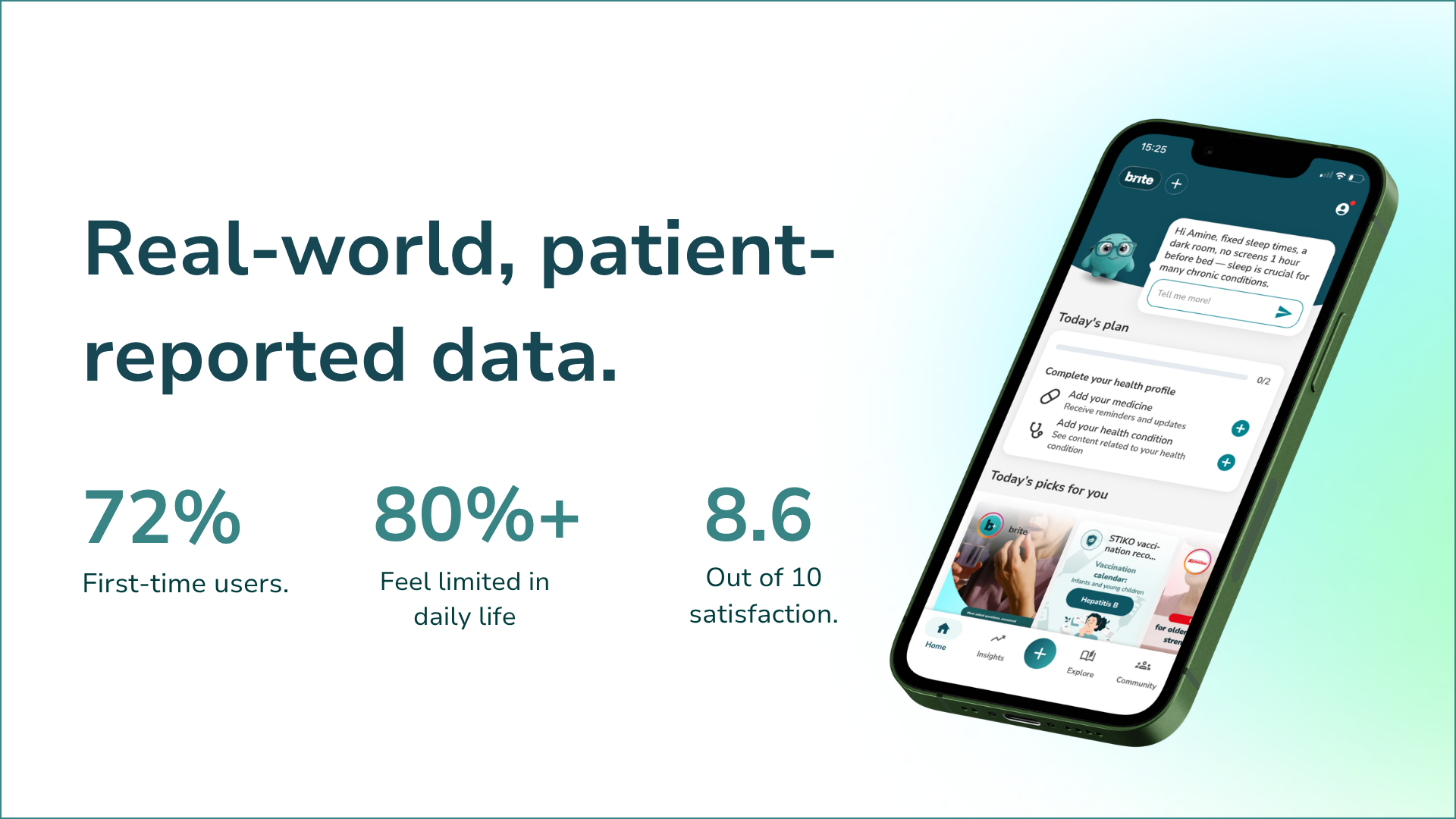
Discover how brite supports pharmaceutical companies in building patient relationships that generate the real-world evidence European payers are demanding at xo-life.com/en/brite
Sources
Outcomes-Based Managed Entry Agreementshttps://remapconsulting.com/managed-entry-agreements/what-are-managed-entry-agreements/https://pmc.ncbi.nlm.nih.gov/articles/PMC9245041/https://pmc.ncbi.nlm.nih.gov/articles/PMC12768689/[https://www.valueinhealthjournal.com/article/S1098-3015(20)30041-3/fulltext](https://www.valueinhealthjournal.com/article/S1098-3015(20)30041-3/fulltext)
EU HTA Regulation and JCAhttps://health.ec.europa.eu/health-technology-assessment/implementation-regulation-health-technology-assessment/joint-clinical-assessments_enhttps://www.eurordis.org/what-happens-hta-2025/
Would you like to find out more or are you interested in XO Life?
Get in touch now, get a demo or answer individual questions in a personal conversation.
Discover even more informative articles
A selection of our latest blog posts for you.


Build meaningful relationships with your patients
Have we sparked your interest or do you have specific questions for us? Let us show you how we can brite up your patients health journey.
I am your personal contact:
Zdenka Vesely
Chief Client Officer
