

Warum 90 Prozent aller Arzneimittel-Nebenwirkungen ungemeldet bleiben und was digitale Gesundheit dagegen tun kann

Every day, across Europe, patients experience side effects from their medications that never get recorded anywhere. They feel nauseous, exhausted, dizzy, or anxious. Some reduce their dose without telling their doctor. Some stop taking their medication entirely. A smaller number end up in hospital. And the vast majority of these experiences simply disappear, unreported, unrecorded, and invisible to the safety systems that are supposed to be monitoring them.
This is not a marginal problem. It is one of the most structurally embedded failures in modern pharmaceutical safety, and it is becoming more consequential by the day as European regulators tighten post-market surveillance requirements in ways that are placing real compliance pressure on every Marketing Authorisation Holder operating in the European Economic Area.
The Scale of a Problem Most People Do Not See
Adverse drug reactions, known in the industry as ADRs, are unwanted or harmful effects caused by a medicine at doses normally used for treatment. They are one of the most significant and costly problems in modern healthcare, yet they remain chronically underdetected because the systems designed to capture them rely almost entirely on voluntary reporting, and voluntary reporting, by its very nature, captures only a fraction of what actually happens.
The numbers are striking. It has been estimated that only 5 to 10 percent of all adverse drug reactions are ever recorded through formal reporting channels, meaning that between 90 and 95 percent of all patient safety events related to medicines go completely undocumented in pharmacovigilance systems. Some studies put the underreporting figure even higher, with research published in Drug Safety estimating that underreporting of ADRs can be as high as 94 percent in voluntary reporting systems.
The human and financial consequences of this gap are significant. Approximately 5 percent of all hospital admissions in the European Union are caused by adverse drug reactions, contributing to an estimated 197,000 deaths annually across the EU. ADRs are the fifth most common cause of death in European hospital settings, and the total cost to society across the EU has been estimated at approximately €79 billion annually. These are not abstract statistics. They represent patients who experienced something harmful, did not report it, and whose experience never fed back into the safety systems that could have helped the next patient.
Why Patients Do Not Report and Why the Current System Is Not Designed to Help Them
Understanding why adverse drug reactions go unreported requires being honest about what the reporting process actually asks of patients, because the answer explains why the problem is so persistent.
When a patient in Europe experiences a side effect, the formal reporting pathway involves finding the national pharmacovigilance reporting form, whether online or on paper, understanding enough about their medication to fill in the required fields accurately, making a judgement about whether what they are experiencing is actually a drug reaction rather than something else, and then submitting a report that typically contains around 35 data fields of information, much of which they have already given to their doctor or pharmacist. The process assumes a level of health literacy, motivation, and time that most patients dealing with the discomfort of an adverse reaction simply do not have.
Research published in Uppsala Reports on pharmacovigilance underreporting identified several consistent barriers that patients face. Many patients do not know that reporting systems exist at all. Those who do often assume that side effects they are experiencing are a normal and expected part of taking medication, and therefore not worth reporting. Others worry that reporting will somehow make them appear difficult or non-compliant in the eyes of their healthcare team. And a significant proportion face straightforward technological barriers, including limited digital literacy or difficulty navigating online forms designed primarily for healthcare professionals rather than patients.
The picture on the healthcare professional side is equally sobering. Research published in JMIR Public Health and Surveillance examining why clinicians do not report adverse drug events found that care providers consistently viewed formal reporting to regulatory agencies as a burden, describing the process as duplicative, time-consuming, and disconnected from the clinical workflow they were already managing. Researchers who observed clinical teams in action found that they never once witnessed a pharmacist or physician submit a report to an external regulatory agency, despite those same professionals routinely documenting adverse events in clinical records for patient care purposes. The information existed. It just never made it into the pharmacovigilance system.
A Regulatory Environment That Is Raising the Stakes
For most of the past decade, the underreporting problem has been widely acknowledged but imperfectly addressed. That is beginning to change, and the pace of change in 2025 and 2026 is something every pharmaceutical drug safety team needs to understand clearly.
European Commission Implementing Regulation (EU) 2025/1466, which entered force in August 2025 with full implementation required by February 12, 2026, represents the most significant update to EU pharmacovigilance obligations in years. The regulation affects an estimated 3,000 or more Marketing Authorisation Holders across the European Economic Area and introduces meaningful changes to how safety data must be monitored, managed, and reported.
Under the new regulation, Marketing Authorisation Holders must actively monitor EudraVigilance, the European database of suspected adverse drug reactions, in parallel with all other safety data sources, treating it as an integrated and required input rather than an optional supplement. Periodic Safety Update Reports, which are the structured safety documents submitted to regulators on a regular cycle, must now include updates on the implementation of risk minimisation measures, not just the results of effectiveness assessments. This requires active cross-functional coordination between safety surveillance, medical affairs, risk management, and commercial teams in a way that has not previously been mandated. Non-interventional post-authorisation safety studies must now be registered electronically with the EMA, creating a clear and auditable documentation trail that regulatory inspectors will reference directly.
The direction of travel is clear. Regulators are not content with passive pharmacovigilance systems that wait for reports to arrive. They are moving toward an expectation of active, continuous, structured safety monitoring, and they are building the regulatory framework to enforce it.
Why the Traditional Response Is Not Enough
The pharmaceutical industry has not ignored the underreporting problem. Over the past decade, most major companies have invested in some combination of safety hotlines, healthcare professional outreach programs, and educational initiatives aimed at improving reporting rates. The results have been limited, and the reasons why are structural rather than motivational.
Educational interventions aimed at healthcare professionals have been shown to improve reporting rates in the short term, but their long-term effects are largely unknown and the evidence base is thin. Safety hotlines require patients to take an active step, at a moment of discomfort or distress, to contact a number they may not know exists. And the traditional national pharmacovigilance reporting systems, even where they have been digitised, remain separate from the everyday digital tools that patients actually use to manage their health and their treatment.
The fundamental problem is one of friction and disconnection. Adverse event reporting, in its current form, asks patients and healthcare professionals to step outside their normal routine to perform a task that delivers no immediate benefit to them personally, using a system they did not choose, to report an event they may not even recognise as reportable. Under those conditions, the rational response for most people is to not report, and that is exactly what the data shows.
What Digital Health Changes and Why the Evidence Is Encouraging
The case for digital health as a solution to pharmacovigilance underreporting is not theoretical. A growing body of peer-reviewed evidence shows that when reporting is integrated into digital tools that patients are already using, in a way that is simple, contextually appropriate, and connected to their everyday health management, reporting rates improve meaningfully.
A systematic review published in BMC Digital Health in 2025, which examined studies of mobile applications designed for ADR reporting, concluded that digital apps support timelier adverse drug reaction detection and enable more detailed and patient-centred data collection, which is particularly critical for identifying rare and severe ADRs that are most likely to go undetected in traditional reporting systems. The review covered multiple app-based reporting systems across Europe and the United States and found consistent evidence that integration into digital tools patients are already using produces better outcomes than standalone reporting channels.
Research published in the International Journal of Clinical Pharmacy found that 87 percent of consumers preferred digital tools for reporting adverse drug reactions when given the option, with European studies showing consumer interest in mobile applications for ADR reporting ranging from 38 to 56 percent depending on the country and the design of the tool. The appetite for digital reporting exists. The gap has been in providing tools that are well-designed enough and embedded enough in patients' everyday health routines to actually capture it.
A clinical trial of the Med Safety application in Uganda, published in PMC, found that the app increased adverse drug reaction reporting rates among healthcare workers by a statistically significant margin compared to traditional methods, with an incidence rate ratio of 1.73, demonstrating that digital tools embedded in existing professional workflows can produce real improvements in reporting behaviour even in resource-limited settings.
The critical design insight emerging from the evidence is that the most effective digital approaches are not standalone reporting tools. They are tools embedded within a broader health engagement experience that patients are already using for other reasons, where side effect reporting feels like a natural and helpful part of managing their treatment rather than a bureaucratic obligation they have been asked to fulfill on behalf of the regulatory system.
The Platform Advantage Over Standalone Reporting Apps
This design insight has important implications for how pharmaceutical companies should think about digital pharmacovigilance infrastructure, and it connects directly to the broader debate about standalone apps versus integrated health platforms that we explored in an earlier piece in this series.
A standalone adverse drug reaction reporting application faces all of the same adoption and retention problems as any other standalone branded health app. Patients download it when prompted, open it once or twice, and then abandon it. The reporting experience that was supposed to improve safety data collection never actually occurs because the app is not part of anyone's daily routine. The investment generates compliance theatre rather than genuine safety intelligence.
A patient who is actively engaged with an integrated health platform that supports their entire treatment journey, providing educational content, peer connection, expert access, and health tracking alongside structured side effect reporting, is in a fundamentally different position. Side effect reporting within that context is not a separate task requiring a separate login and a separate form. It is a natural part of the ongoing health conversation that the platform is already supporting. The friction that kills reporting in traditional systems is largely eliminated because the patient is already there, already engaged, and already sharing information about their health experience.
This is not a minor design preference. It is the difference between a system that generates meaningful real-world safety data and one that generates the illusion of a safety data infrastructure without the substance.
What the New Regulatory Requirements Mean for Platform Design
The requirements introduced by EU Regulation 2025/1466, combined with the broader trajectory of European pharmacovigilance oversight, set a clear direction for what pharmaceutical companies need from their digital patient engagement infrastructure on the safety side.
Structured, auditable safety data collection is now an expectation, not a nice-to-have. The regulation's emphasis on integrated EudraVigilance monitoring, cross-functional coordination between safety and commercial functions, and electronic registration of post-authorisation safety studies all point toward a world where safety data needs to be collected continuously, structured consistently, and traceable clearly. A patient support platform that captures adverse event reports in unstructured, inconsistent formats through informal channels is not fit for this purpose. One that collects structured safety-relevant data with appropriate patient consent, consistent data fields, and clear integration pathways into pharmacovigilance workflows is a genuine compliance asset.
The requirement for Periodic Safety Update Reports to include updates on risk minimisation measure implementation also has direct implications for digital patient support. If a risk minimisation measure includes patient education materials, medication guides, or structured support for a specific patient population, the effectiveness of those measures now needs to be tracked and reported. A digital platform that can demonstrate patient engagement with educational content, track comprehension and behaviour change over time, and generate structured evidence of risk minimisation effectiveness is providing something that the regulatory environment now explicitly requires.
The Broader Opportunity Beyond Compliance
It would be a mistake to frame the pharmacovigilance opportunity purely as a compliance requirement, because the data generated by better adverse drug reaction reporting has value that extends well beyond regulatory obligation.
Safety signals that are detected earlier, because they are being reported by a larger and more representative patient population through a digital platform rather than by the small minority who navigate formal reporting channels, have direct commercial value. Early identification of a tolerability issue that is causing patients to discontinue therapy can lead to label updates, dosing guidance changes, or patient support interventions that improve persistence and ultimately protect revenue. Safety signals that surface late, after patterns of unreported discontinuation have already eroded the commercial performance of a product, cannot be acted on in time to make a difference.
Patient-reported safety data collected through a structured digital platform also has potential value for post-authorisation safety studies, for Health Technology Assessment submissions downstream of the EU Joint Clinical Assessment, and for the real-world evidence packages that increasingly determine pricing and reimbursement outcomes across European markets. The same data infrastructure that serves pharmacovigilance compliance serves market access strategy, and that dual utility makes investment in digital patient engagement for safety purposes considerably more commercially defensible than the compliance framing alone would suggest.
What Pharma Safety and Digital Teams Should Be Thinking About Now
The combination of a persistent underreporting problem, a new and more demanding regulatory environment, and a growing evidence base for digital solutions creates a clear set of priorities for pharmaceutical companies whose pharmacovigilance systems are not yet equipped for what regulators are now expecting.
Patient support platforms need to integrate structured side effect reporting as a core feature, not an optional add-on. The reporting experience within the platform needs to be designed for patients rather than for regulators, meaning it should be simple, contextually appropriate, and connected to the patient's broader health management experience rather than presented as a separate compliance task.
The data collected through digital patient engagement needs to meet the standards that pharmacovigilance systems require. Consistent data fields, appropriate consent frameworks, clear audit trails, and integration pathways into existing safety databases are not optional if the data is going to serve its intended purpose. Collecting patient-reported safety experiences in formats that cannot be used in regulatory reporting is an investment that delivers neither patient value nor compliance value.
And cross-functional collaboration between drug safety teams, medical affairs, patient engagement, and digital health functions is now a regulatory necessity rather than an organisational aspiration. The February 2026 requirements under EU Regulation 2025/1466 explicitly require coordination between safety surveillance and commercial functions on risk minimisation measure tracking, and that coordination needs digital infrastructure to function effectively at scale.
Closing the Gap
The pharmacovigilance underreporting problem has existed for as long as voluntary reporting systems have existed. What is changing is the regulatory environment around it, the evidence base for digital solutions, and the availability of integrated patient health platforms that can embed safety reporting in a way that actually works for patients.
The companies that move toward integrated digital safety data collection as part of a broader patient support and engagement strategy are not just preparing for EU Regulation 2025/1466. They are building the kind of continuous, structured, patient-reported safety intelligence that the next phase of European pharmacovigilance oversight will require, and that is already proving valuable for market access, real-world evidence generation, and commercial performance in ways that the compliance framing alone does not capture.
The gap between what patients experience and what gets reported has always been a patient safety problem. It is becoming a regulatory compliance problem and a commercial problem simultaneously. The tools to close it exist. The question is how quickly the industry chooses to use them.
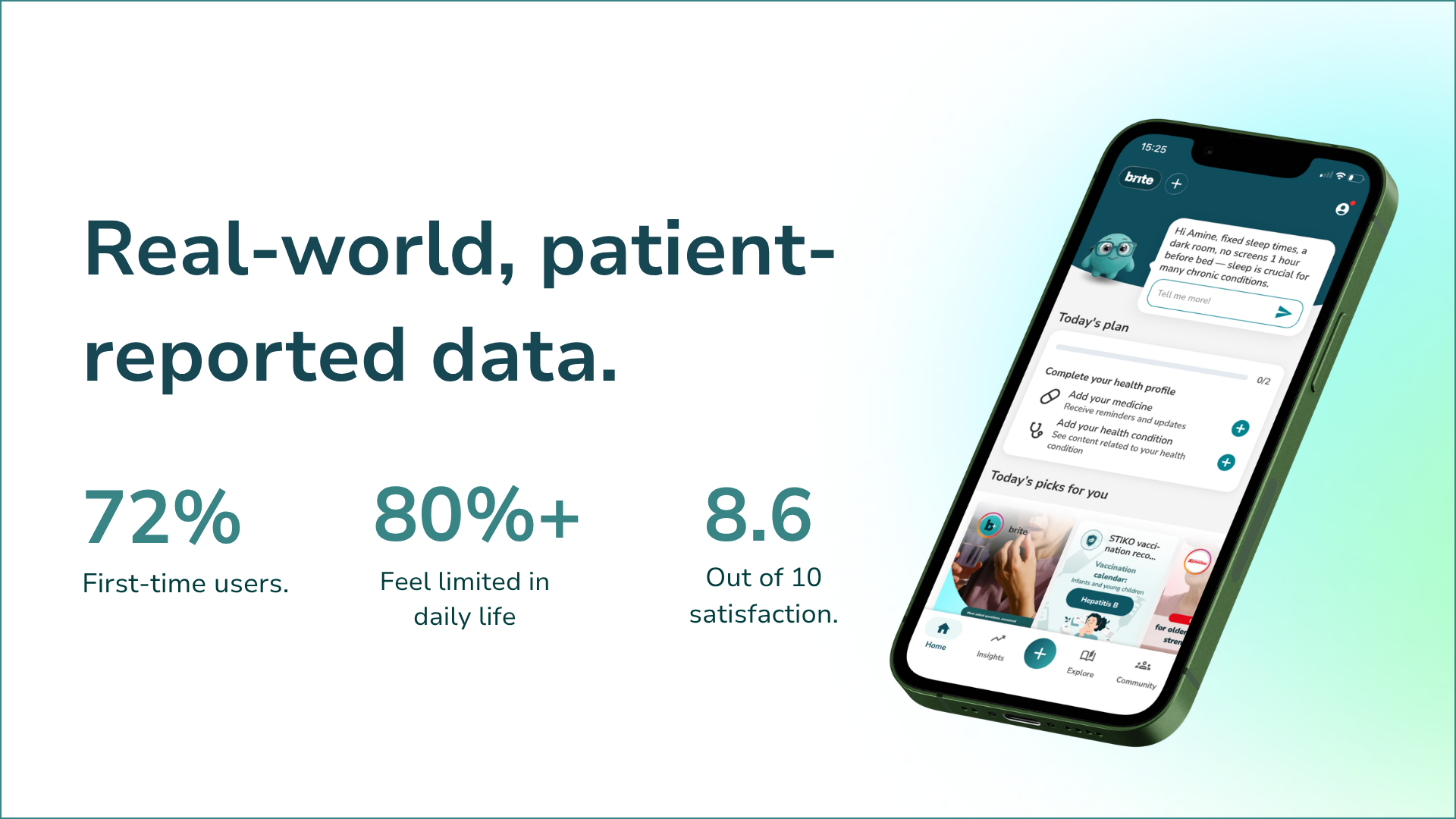
Discover how brite supports pharmaceutical companies in building patient relationships that generate real-world safety data at xo-life.com/en/brite
Sources
ADR Underreporting Statistics and Burdenhttps://pmc.ncbi.nlm.nih.gov/articles/PMC4412588/https://pmc.ncbi.nlm.nih.gov/articles/PMC13018463/https://pmc.ncbi.nlm.nih.gov/articles/PMC10366238/https://www.sciencedirect.com/science/article/abs/pii/S1551741119300129https://pmc.ncbi.nlm.nih.gov/articles/PMC5904209/https://bpspubs.onlinelibrary.wiley.com/doi/10.1111/bcp.70491
Sie wollen mehr erfahren oder sind an XO Life interessiert?
Jetzt Kontakt aufnehmen, eine Demo erhalten oder individuelle Fragen in einem persönlichen Gespräch klären.
Entdecken Sie noch mehr informative Beiträge
Eine Auswahl unserer neusten Blog Beiträge für Sie.


Überzeugen Sie sich selbst in einer Live-Demo
Haben wir Ihr Interesse geweckt oder haben Sie konkrete Fragen an uns? Wir erzählen Ihnen gerne mehr oder antworten Ihre Fragen.
Ich berate Sie gerne:
Zdenka Vesely
Chief Client Officer
